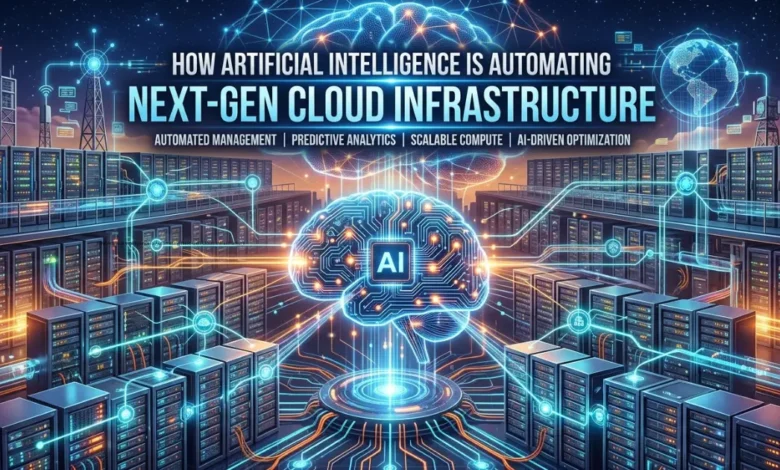
How Artificial Intelligence is Automating Next-Gen Cloud Infrastructure. The demands on modern cloud environments have scaled beyond human management capacity. As enterprise applications migrate toward highly decentralized multi-cloud models, managing data traffic, server loads, and real-time security threats has become incredibly complex. In 2026, the technology landscape is experiencing a massive paradigm shift: cloud infrastructure is no longer just managed by humans—it is being automated, optimized, and defended by artificial intelligence.
The integration of AI in cloud infrastructure has transitioned from an experimental trend into a foundational necessity. By utilizing deep learning models and predictive analytics, hyper-scale cloud ecosystems can now dynamically adjust their own parameters without human intervention.
This AI Radar strategic analysis explores how artificial intelligence is transforming next-generation cloud architecture through intelligent automation, self-healing networks, and predictive resource allocation.
1. Predictive Resource Provisioning and Load Balancing
In traditional cloud settings, allocating server resources (like CPU power, memory, and storage) relies on static thresholds or manual scheduling. This often leads to either over-provisioning (wasting expensive computing budget) or under-provisioning (causing network lag and system crashes during sudden traffic spikes).
AI-driven cloud infrastructure completely solves this bottleneck through machine learning models that analyze historical traffic data in real time.
- Intelligent Auto-Scaling: Instead of reacting after a traffic surge occurs, AI models predict spikes hours in advance by monitoring global usage patterns. The system automatically provisions virtual instances and balances data loads seamlessly.
- Cost Optimization: By continuously scaling down unused cloud environments during off-peak hours, AI automation can slash enterprise cloud expenses by up to 40%, ensuring hyper-efficient infrastructure utilization.
2. AIOps and Self-Healing Networks
Artificial Intelligence for IT Operations, or AIOps, is the cornerstone of automated system maintenance. AIOps platforms collect and aggregate massive volumes of log data, metrics, and telemetry from across the entire cloud stack to identify anomalies that human engineers might overlook.
When a hardware failure or a software conflict occurs, the AI-driven network executes self-healing protocols:
- Anomaly Detection: The AI identifies a micro-drop in data throughput within a specific cloud region.
- Root Cause Analysis: Within milliseconds, the machine learning model pinpoints a faulty network switch configuration.
- Automated Remediation: The system automatically re-routes global data traffic away from the corrupted node and spins up a cloned backup instance to maintain 100% uptime, all while opening an automated support ticket detailing the fix.
3. Intelligent Cybersecurity Threat Detection
With cyber attacks becoming increasingly sophisticated, static firewalls and signature-based antivirus tools are no longer sufficient to protect massive cloud repositories. AI automation acts as a proactive security shield.
By continuously mapping out a baseline of “normal behavior” across the entire cloud infrastructure, AI security tools can immediately flag zero-day exploits, unauthorized insider data access, or unusual data exfiltration attempts.
For instance, if a network router suddenly begins tunneling encrypted data packets to an unrecognized IP address, the AI instantly isolates that compromised segment of the network. Learn more about the critical baseline strategies for protecting hardware connection points by reading our guide on how to secure your home router from cyber attacks.
Centralized Cloud Operations vs. AI-Automated Infrastructure
| Infrastructure Attribute [24, 25, 26, 27] | Centralized Human-Managed Cloud | AI-Automated Next-Gen Cloud |
|---|---|---|
| Scaling Mechanism | Reactive (Triggered after a threshold is breached) | Predictive (Anticipates traffic shifts using machine learning) |
| Downtime Management | Manual troubleshooting and human engineering | Self-Healing (Automated isolation and automated recovery) |
| Security Response | Alert-based (Triggers alarms for human triage) | Autonomous (Instant isolation of anomalies) |
| Resource Efficiency | Prone to over-provisioning and wasted budget | Dynamic Allocation (Continuously optimized for cost and performance) |
4. Intelligent Data Routing and Latency Reduction
As global users demand real-time data streaming, high-speed connectivity, and lag-free online environments, latency reduction has become paramount. Artificial intelligence optimizes the global routing path of data packets traveling between edge data installations and core cloud data centers.
By monitoring global network congestion, fiber outages, and even weather patterns that might cause temporary signal degradation in satellite installations, the AI dynamically shifts the digital path of data traffic. This intelligent routing keeps latency low, ensuring that data-heavy applications operate at maximum efficiency from anywhere in the world.
Final Thoughts: The Intelligent Cloud Ecosystem
The future of technology relies entirely on the infrastructure supporting it. By shifting from manual, human-dependent management to autonomous, artificial intelligence-driven orchestration, the cloud has become faster, more secure, and highly resilient.
As AI models continue to evolve, next-generation cloud networks will achieve complete structural autonomy, laying down the stable computational foundation required for future innovations.
Discover more from Tech News Radar
Subscribe to get the latest posts sent to your email.